Zeiss Loxia 50mm f2 First Look

I thought it was time to blow the dust off my blog.  To be honest, it has been so long that it is going to require the services of a Dyson to clear the dust.  After a long quiet period, I have been going through a busy patch of blog worthy activities.  As is often the case, this has centred on a big trip.  I had planned, to mark my 50th birthday, to return to New Zealand.  The last trip had been back in 1990 with my father.  Now about half a life time later, I was going to return with my own kids.  It took a while to find a window in which we could all go and that window meant going in winter.  However, we did make it and the trip was everything I could have hoped for and more.  There will be more trip related posts in the future.  We brought back so much material that its going to take a while to get through it all.  This post is more of an aside but is something of more current interest.

I have been toying with the idea of hiring some equipment for a while now.  I have had many conversations with Guy from Hireacamera at various trade shows and hovered over their website.  What has been holding me back is being around for the drop-off/pick-up and a tendency to buy the things I want - gear acquisition syndrome.  So it needed to be something I really wanted to try, but only had an outside chance of purchasing.  Last week Hireacamera posted up on Facebook they were getting the brand new Zeiss Loxia range of lenses in and I decided the 50mm f2 was the perfect item to test the service.

Zeiss Loxia 50mm f2

Zeiss Loxia 50mm f2

My interest for the Loxia is for my Sony A7s so the e-mount version.  Sony’s A7 range of full frame mirrorless cameras has garnered a lot of attention.  The e-mount is one of the best supported mounts for adapting lenses around but what has been in short supply are native lenses (FE) from Sony.  The Loxia range is Zeiss’ entry into this market in their own right as they have with the Touit range for crop sensor e-mount.  The first two Loxia lenses are a 50mm f2 and a 35mm f2.  Just to confuse matters, there are already two Sony Zeiss lenses of similar specification.  These are the Sonnar 35mm f2.8 and 55mm f1.8.  So why have Zeiss bothered?  Well the Loxia lenses come from a different route.  One of the most popular mounts to adapt to the A7 series is the Leica M mount.  Part of the appeal of the A7 series is its compact size.  They don’t really suit having long heavy glass hanging off the front of them.  Much of the existing full frame compatible glass tends to fall into that category.  However, the diminutive Leica M lenses, as well as from Voigtlander and Zeiss, are a great match physically. 
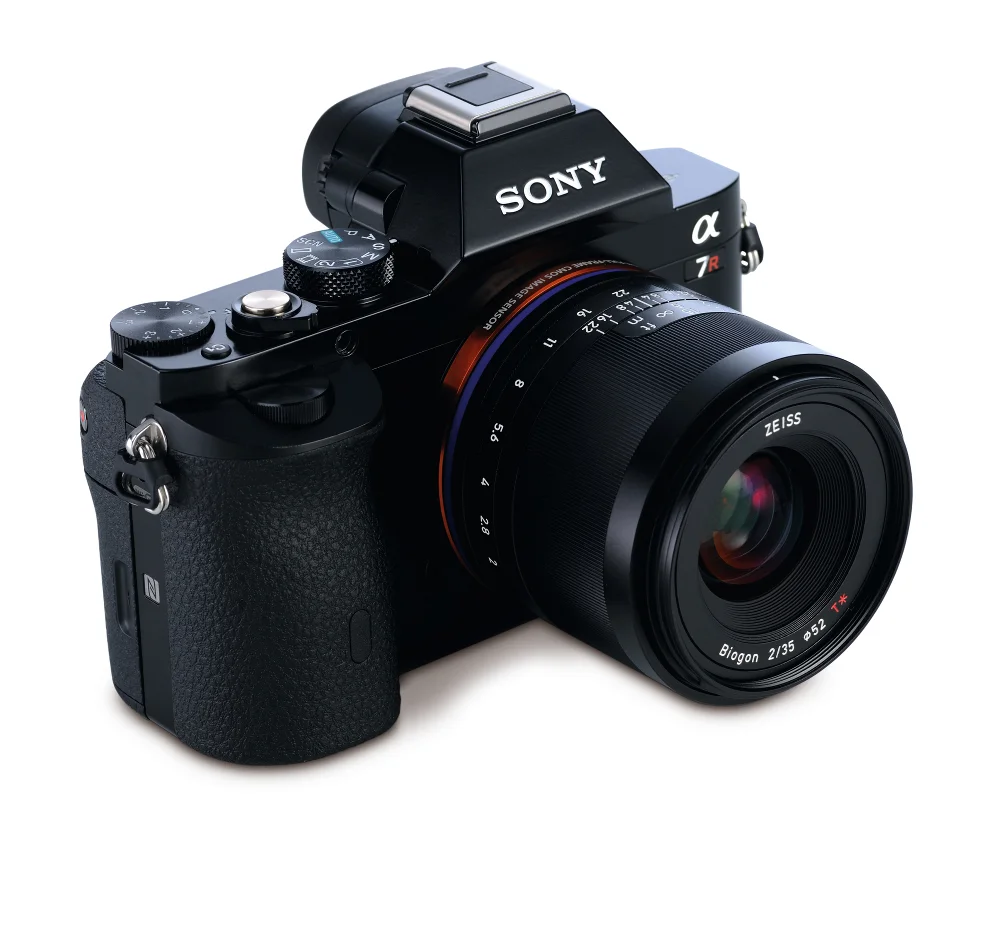
Sony A7r with Zeiss Loxia 35mm F2 look a natural pairing.

Sony A7r with Zeiss Loxia 35mm F2 look a natural pairing.

However, some of the designs had some optical issues when used with adapters so what Zeiss has done is to tweak their designs and put them in some sexy new housings specifically for this new breed of mirrorless camera.  So now the A7 owner has some options.  The Sonnar lenses have had some good reviews and they are fully electronic.  If you want a manual lens with traditional teutonic build quality then look to the Loxias.

The modern full frame lenses that I own were all bought for my 5D Mark II.  The A7s has replaced the 5D, but I have held on to most of the glass.  I have a Metabones and Viltrox adapters (another one for later) for EF to FE mount.  The heavy Canon L zooms feel unbalanced on the dainty A7s.  So I have looked to the past for inspiration.  I have stated my fondness for the compact SLRs from the 70s and 80s made by Pentax and Olympus.  The A7s is similar to classics like the OM2 so it’s no surprise that the contemporary Zuiko lenses are a good physical match.  I recently picked up a Zuiko 50mm f1.4 off eBay.  I also still have my trusty Canon EF 50 f1.4.  Lastly, I have Sony’s own 28-70mm f3.5-5.6 kit lens.  This turns out to be a slow sounding 50mm f4.5 in this company.

From left to right: Zuiko 50/1,4 on a dumb adapter, Loxia 50/2, Canon EF 50/1.4 on a Metabones MkiV, 3.5" drive is for scale

From left to right: Zuiko 50/1,4 on a dumb adapter, Loxia 50/2, Canon EF 50/1.4 on a Metabones MkiV, 3.5" drive is for scale

I don’t have any test gear, so I my pixel peeping is going to be limited.  I concentrated on taking stills though I would use any lens for video as well.  The Loxia came out with me on a photo walk in my home town of Chester.  I then went over to Wales with all the lenses to do some comparisons in the relatively controlled conditions of my Mum’s back garden.

Handling impressions

When you open the lid of Hireacamera’s Pelicase for the first time, its hard not to fall in love with the Loxia immediately.  It a very good-looking lens.  Easing it out of the foam and the gear lust continues.  It has just enough weight to feel expensive and hewn from solid without actually being heavy.  The lens hood is metal and has a positive connection to the lens.  The focus is smooth with a lovely linear amount of effort through its range.  The aperture ring has a light click in third stops.  I didn’t experiment with it, but the little tool to declick the aperture was provided with the lens - something video shooters will appreciate.

Once on the A7s the Loxia feels perfectly at home.  It really is a nice combination.  I was shooting in either aperture priority or full manual.  However, the Loxia is not a dumb lens.  It does have communication with the body and this bring some immediate benefits.  Firstly, the body knows when you are focussing.  This means that the zoom feature gets activated to get critical focus.  When combined with peaking this is extremely useful.  You will also get full metadata on the pictures you take.  I did notice one handling downside.  The aperture ring is perhaps guilty of form over function.  Its a narrow, flush ring sandwiched between the mount and the much broader focus ring.  It also has to bear the aperture numbering.  I found it awkward to find with my normal grip.  It was also too easy to nudge the focus when changing it which of course prompts the camera to magnify.  People with big hands or wearing gloves will struggle more than I did.

The Zuiko wins on size but one its been paired with its adapter there is little in it compared to the Zeiss.  The focus feel is similar but it can’t quite match the Zeiss’s linearity through the range.  Peaking works but if you want to push in you have to do it manually.  Zuiko’s trademark aperture at the end is much easier to find but you only have whole stops and it tops out at f16 not f22.  When you stop down the screen will darken.  Its like using the depth of field preview on an SLR.  Even wide-open it seemed a bit darker than when using the Zeiss.

The Canon 50mm f1.4 is not an L lens and it feels a bit plasticky compared to the Zeiss and Zuiko.  Its also noticeably bigger and heavier when paired with the Metabones adapter.  Switched to manual focus the range seems very short after the 180 degrees of the two Zeds.  It also feels crunchy like its not enjoying being out of AF.

The Sony kit zoom is a very different beastie from these primes.  Its a bit larger but no heavier, though at the expense of feeling more plasticky.  At nearly 4 stops slower than the fastest lenses here you are not in the same league for getting shallow depth of field.  In manual focus mode, the ring is much smoother than the Canon but it’s laggy.  Like all the Sony fly-by-wire zooms I have tried before, it senses inertia.  It makes it unpredictable.  The AF is quick and reliable though.  It is also the only lens here which has stabilisation.

Performance

I was very pleased with the quality of the shots I got from the Loxia.  Provided the dumb human pressing the shutter had nailed the focus, the results look sharp with natural colours.  A senior moment involving my tripod plate meant that my planned semi-scientific test comparisons weren’t really consistent enough to publish.  Would they do show is that Loxia can hold those performance characteristics across a wide range of apertures.  Compared to the f1.4s (at the same apertures) it has the least vignetting.

The Zuiko takes a bit longer to get into its stride both with vignetting and edge sharpness.  I don’t find the bokeh as attractive as on the Olympus.  The images are about a stop darker using aperture priority so there is something going with the metering.  By f5.6 it’s very good. 

The Canon images did not look sharp in my test but I don’t think I nailed the focus.  This is probably operator error but it also shows the limitations of peaking combined with a narrow focussing action. 

The Sony zoom turned out to be very respectable performer.  It may not offer the aperture range of the others but, within that range, it is very consistent.  Whether the camera is giving it a little helping hand I am not sure, but I am working off the RAWs in Apple Aperture.
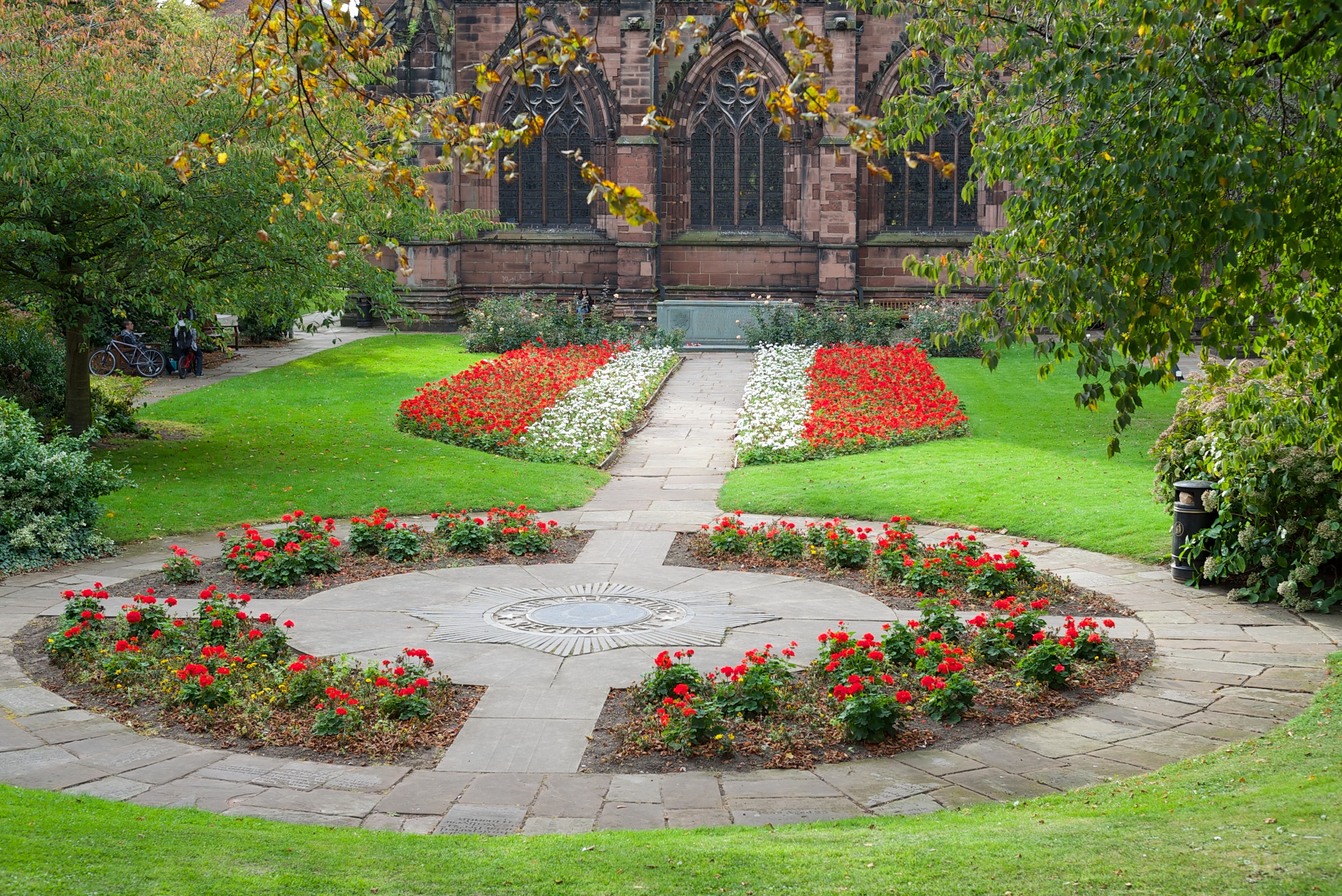
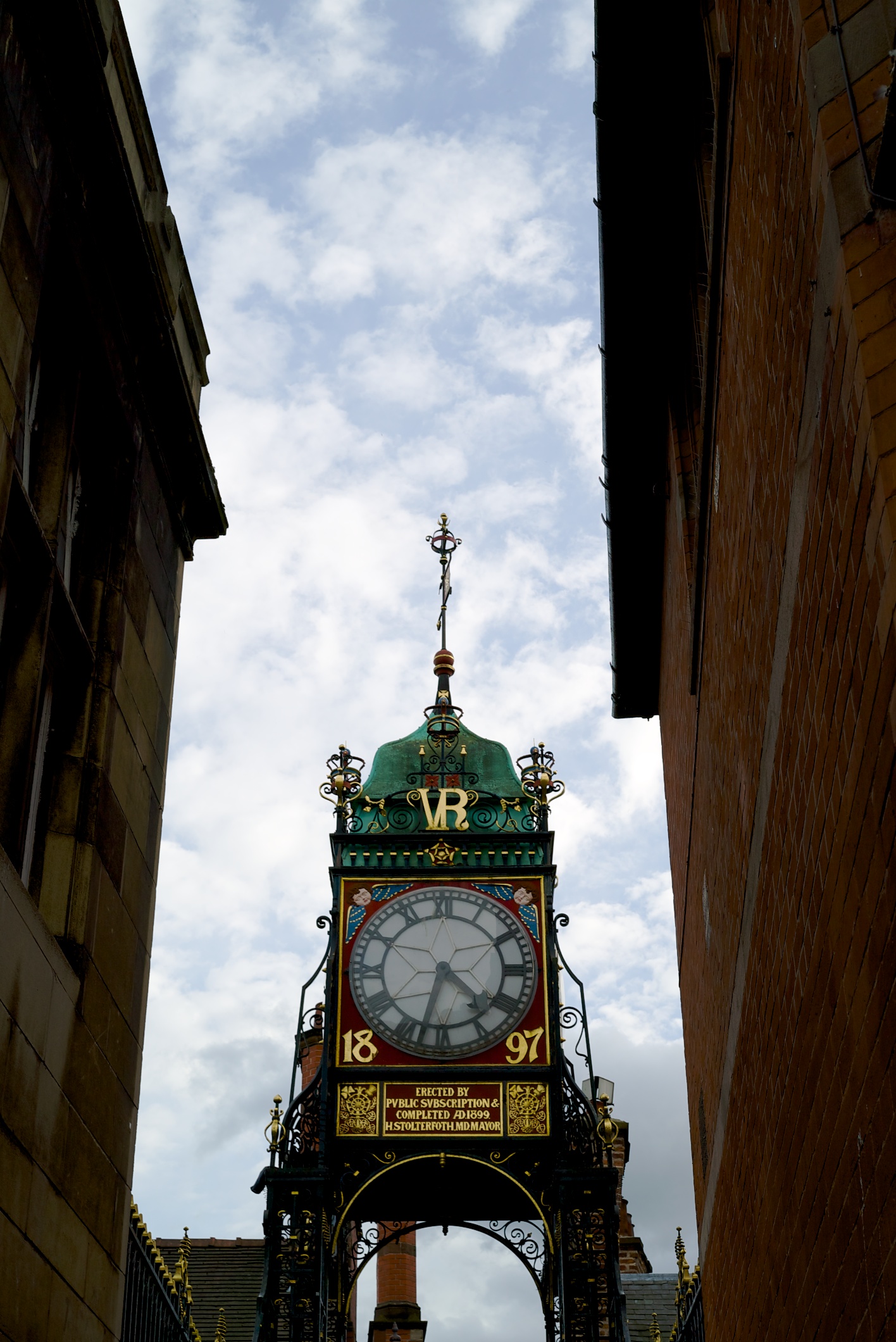
Sample Images

Conclusion

Amongst the lenses I had gathered there is no doubt which is the stand-out candidate.  The Loxia is the best performer and the nicest to use.  It is also the one you will most want to own.  That ownership will come at a price though at over £700.  A little more will buy you the Sonnar and AF.  However, for a still/video shooter like me I would prefer MF and the declickability of the Loxia. 

The Zuiko can be had for a fraction of that cost with the adapter.  Ergonomically it works well with the A7s but, with no integration with the body, its more fiddly to use.  The Loxia lets you work faster and with a better hit rate.  On the plus side, I can use it with other bodies like my micro four thirds cameras. 

To buy a EF Metabones just to use a Canon 50mm would make no sense.  Its a good lens on a 5D but can’t match the Zeiss when adapted to the Sony.  If like me you have a number of Canon lenses then a Metabones makes more sense.  There are other premium options but most of those are larger like the Sigma Art lens.  If there is a downside with e-mount it is with adaptability.  The e-mounts short flange depth means the A7s can be adapted to most other lens mounts.  The flip side of this is it means e-mount lenses can’t be adapted to anything else.  So your investment will be locked into e-mount.

For myself? My credit card is still having to cool down after the New Zealand trip so I am not ready to make that call.  My experience with Hireacamera was excellent so maybe I will go that route for now if I need one.  Now the 5D has gone and I only have MFT and e-mount cameras I need to review my options.  My Canon lenses are adaptable, but don’t physically suit the cameras I have any more.

A Good Vintage

As a follow up to getting an Olympus OM2n a few months back, I finally managed to bag one of my all time past favourite cameras on eBay - a Pentax Super A.  A follow-up to the extremely successful ME Super, the Super A was high tech wonder in its day.  With the updated PKA mount lenses you had a choice of program, aperture or shutter priority and it featured new fangled LCD displays and TTL flash.  Build quality feels excellent but still in a beautifully compact form factor.  It was enough to win it European Camera of the Year on its launch 30 years ago.  

Pentax Super A next to the OM-D EM5

Pentax Super A next to the OM-D EM5

This last weekend the British summer decided to turn up.  After a bit of a late start, I took the opportunity to throw my camera bag in the car, get the roof down and head west across Wales.  I sacrificed a few MFT lenses to fit in the Super A with a 50mm F1.7 PK lens and a roll of Velvia 50.  One of my OMD batteries was dead but the spare said it was full which I thought would be fine.

After a very pleasant drive through back roads and over the Denbigh Moors, I headed towards Bodnant Gardens.  This is a national trust property with rather lovely gardens which cascade down the hillside in a loverly combination of formal and informal arrangements.  Due to an unexpected detour due to a running event it was already 3:30pm when I arrived - just 90 minutes before closing.  This proved less of a problem than I had expected as I found out that my OMD had flat out lied to me about its battery - with flat being the operative word.  I stuck the macro lens on it and had to eek out the power as much as possible.  So the main duties fell to the Pentax and its 36 exposures.  

Just the one lens meant a lot of zooming with my feet but it also means trying to find a bit of extra creativity.  Shooting with an old school focussing screen is a bit of a joy.  The EVF in the OMD is good and it has its advantages but it looks flat and electronic against the big full frame pentaprism.  One challenge was having to judge depth of field again.  Luckily the Super A has a DoF preview but this really darkens the image so there is still a degree of guesswork involved.  I will probably lose a few frames to shake as I have got so used to the OMDs stabilisation. I tend to be too optimistic with shutter speeds these days.  At ISO 50 Velvia is a slow film, especially with the OMD only starting at 2 stops faster.

It was a hot day but there was a fair bit of breeze around to stir the flora.  This was a challenge for the macro shots with such a limited time.  The upside of lateness was that the visitors were beginning to thin out.  I don’t really like folks in my landscape shots.  If they are prepared to combine doing something interesting whilst failing to notice me - that’s OK.  That is one place the OMD does score.  Its a bit more discreet in operation.  The thunking mirror of the Pentax is a joyously mechanical sound but subtle it ain’t. Sometimes its OK for folks to stand somewhere that lends a sense of scale.  What they more typically do is to come into the edge of the shot just as I press the shutter in inappropriately coloured clothing.

I used to shoot Kodachrome 64, so waiting for slides was always a drawback.  These days the demand for E6 processing is too low for the local labs to turn it round quickly.  So I must wait a couple of days to see if my new Super A does more than just feel nice to shoot with.

You can see the pictures I took with the 60mm f2.8 macro here and the slides from the Pentax here 

Update

I have added the slides but whilst I am happy with them I am not to thrilled with my scanner's attempts at digitising them.  The main problem is they are never sharp.  Whilst I am prepared to accept my manual focussing skills maybe be a little rusty, something should be sharp.  If it was the lens then even my aging eyes should notice something in the finder.   Also frustrating is the loss of dynamic range, with the shadows getting very crushed particularly.  Colour rendition is OK but they don't have the punch I see on the lightbox. 


NAB 4K Update

NAB2013 has been and gone and its clear that 4K was a strong message from the show.  So has anything really major changed from my previous scriblings in the latest round of announcements?  I don't think so.  I don't think the overall trajectory has changed.  

​Blackmagic Production Camera 4K

​Blackmagic Production Camera 4K

The leading area at the moment is acquisition with a strong growth in the number of 4K capable devices from Sony, Blackmagic, Phantom, Kineraw etc.  The post world is keeping up with support for codecs, 6G SDI and Moore's Law helps with the processing.  We have a problem with storage though.  We are dealing with a double data whammy of RAW and 4K, but storage mediums are not increasing in density per cost much at the moment.

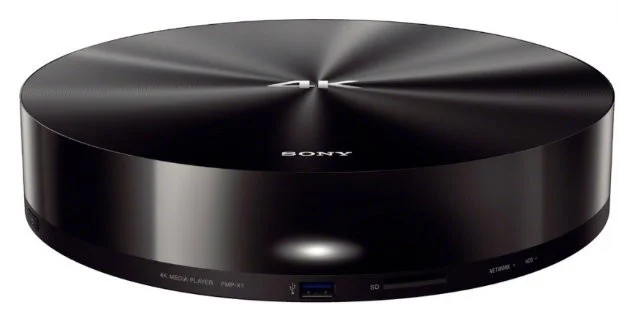
​We have the same problem with distribution.  Sony's announcements to support their 4K consumer devices are a bit of a drop in the ocean at the moment and not very compelling, even for AV enthusiasts like me.  My 1080p projector can reveal the difference between a blu-ray and a more compressed HD signal (download or satellite) or an up-scaled DVD.  Ultra HD has to be perceptibly better than HD blu-ray otherwise its just a waste of bits.

​Sony FMP-X1 4K media player

​Sony FMP-X1 4K media player

I am getting more tempted to look at 4K acquisition.  I do think there is a strong case for getting as good a "digital" negative as you can justify.  Even if your post workflow/pipeline is going to have to wait a while to catch up, there are probably enough options round dual record and proxies to make it viable now.

At some point, the infrastructural and technical challenges will be sorted and the sheer desperation ​of the consumer electronics business for you to buy new stuff will succeed.  Who knows, British Telecom may even realise that my rural exchange is still wired with string and replace it with something from the 21st century.  At that point I will be able to take a trip on my hover chair to a dusty cupboard and drag out those old 4K files.  

Film has been a pretty good archival medium.  Maybe not in its nitrate days when it was close to a WMD level of danger, but in the post war years.  I have pictures in my Aperture library going back to the turn of the millennium and my first digital camera - a 2MP Canon S10.  I have scans from the same era from slides made with a slide scanner.  Resolution, contrast, colour fidelity ... they have none of those things.  However, a scan of a slide now taken with my multifunction printer looks like it came from a DSLR.  There is little I can do now to my S10 files to make them better.  Digital files will always be limited by the technology they were acquired with.

​Zoom and Enhance - still largely Science Fiction

​Zoom and Enhance - still largely Science Fiction

The Not Live from NAB blog

I really wanted to go this year and had pencilled in a trip taking my son Alex.  In the end, it was just not to be and we only got as far as London for BVE.  BVE is a good show but it doesn't have the international draw that NAB does.​  One of the big attraction of NAB is getting meet people who otherwise live only on the interwebs in Twitter, Facebook and blogs, not only from the US, but from across the world.

So whilst I promised myself I would stay at home and be productive, what I really do is get thoroughly ​distracted by every NAB tweet and post and slowly get dragged into Pacific Daylight Time.  If you missed all the excitement, then I recommend paying a visit to Newsshooter.com whose coverage really rocked this year.

So which have been the biggest distractions from the show for those not in Sin City.  This is my own personal top 5 in traditional reverse order:

​#5 Blackmagic DaVinci Resolve 10

​DaVinci Resolve 10

​DaVinci Resolve 10

Blackmagic Design have developed a real talent for the surprising over recent years.  Any suspicion that these are merely headline grabbing publicity stunts has been largely put to bed by a history of delivery (with a few notable exceptions) and a real sense of purpose ​from their CEO Grant Petty.

Resolve has been a consistent example of their philosophy.  Since they purchased DaVinci it has progressed from being a megabuck workstation solution through affordable Mac tower solution to free laptop solution in its Light form.  This would be understandable if Blackmagic were letting development slide but they are still cranking out new versions.  Resolve 10 has two stand out features: a built in NLE and Live grading.  The cost for upgrading - free and the free light version gets most new features too.  Why Mr Petty, you are spoiling us.

#4 Freefly Movi

​Movi M10

​Movi M10

With a pre-NAB spotlight shone on them by Vincent Laforet, the Movi was sure to be a show hit.  Vincent at hinted at something "game changing" before he showed his Movi short.  "Game changer" is such a loaded term these days that everyone knew Vincent would not use it lightly.  I got the impression from the interwebs that many folks went through the same journey I did.  Phase 1 was guessing what this new thing was going to be.  Phase 2 was mild disappointment when it turned out to be a rig instead of a 4K hover car for $1000.  Phase 3 was enjoying the video but not quite getting the significance.  Phase 4 was watching the BTS and say "Wow, thats so cool" a lot.  

Nothing I saw in the show demos and interviews has dislodged it from Sub Zero on an NAB Top Gear style Cool Wall.  It's not a game changer for me yet because I can't get close to justifying the $15k for the first model.  Rest assured I will be watching this area closely from now on.

#3 Convergent Design Odyssey 7Q

​I own an Sony FS700 which I would have had in this countdown a year ago.  Its usp is definitely its high speed modes but its main attraction was that it was a good all-rounder  for the money.  It fixed many of the flaws of the FS100 which is good but the feeling amongst my FS owning mates is no-one has quite nailed the picture profiles yet so that the FS100 still has a nicer look.  Another major difference of the FS700 over its little brother was that it was 4K ready.  Like many, I have a deep distrust of the word "ready" in a tech sense and this has not been helped by the trickle of vague information coming out of Sony.  Well, they have opened the sluices a bit and the we now know a lot more apart from the 2 critical bits of when and how much.  My mate Den Lennie has done a nice summary of what will be coming.  In terms of outputs we have got much more than we could have hoped.  Along with 4K, we are getting some arguably more useful 2K RAW options plus an unanticipated continuous high speed recording option.  The downside is the known cost of the Sony hardware required.  This isn't a surprise as much of it comes from Sony's very nice F5/55 line but the FS700 requires an additional interface unit. 

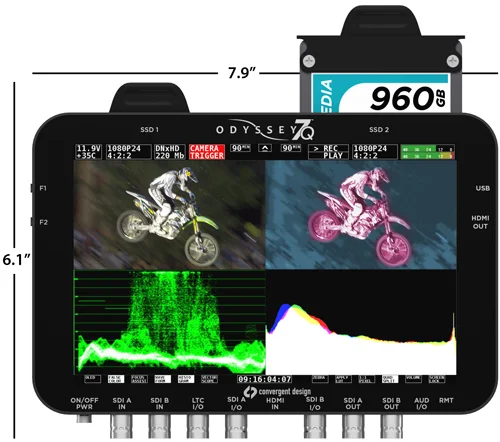
Convergent Design Odyssey 7Q

Convergent Design Odyssey 7Q

So this is where the 7Q enters into our story.  The Odyssey units are effectively a very nice monitor with a recorder built-in.  This is the opposite approach to my Ninja 2.  Convergent have announced a deal with Sony which will allow you to record both 2K and 4K from the FS700 onto the 7Q onto its twin SSD drives.  It doesn't exactly match the Sony solution exactly, but it is close enough for most for what we expect to be less wonga.  Convergent and Sony will still need to sort out their full pricing first before we will know the exact amount.​  As I need a field monitor, the 7Q is an attractive option.  It stings a bit that it is likely to cost more to upgrade than Blackmagic's new 4K for $4k production camera does outright but the FS700's merits are extended and enhanced.  Tony Reale from NextWaveDV recorded this great interview with Juan Martinez (Senior Product Manager) from Sony.  Sony's new found enthusiasm for supporting third parties is encouraging.  I think its clear that Sony understands that ending up with an FS700 that costs F5 money is pointless and they need to carry the fight to cameras like the Scarlet and 1DC by making alliances.

#2 DJI Phantom Gimbal

The DJI Phantom is not a new item having been high on my gadget lust list since Christmas.  The original standard GoPro mount made it the go to Cine Quadrocopter for those whose construction skills stopped at Lego (and not Technics either).  It was a great My First copter but the film clips were always a bit lacking.  The problem was rolling shutter effects caused by prop vibration and wind shear.  DJI's solution is to pair the Phantom with a downsized version of their Zenmuse stabilised gimbal.  DJI have specifically designed the gimbal for the Hero3 as it locks in like a GoPro backpack.  As well as smooth, jello free shots, you now get the ability to tilt the camera in the vertical axis from the remote. If you don't mind holding the Phantom and looking like a child playing with a Corgi copter, you can even use it as a budget Movi.  It is not necessary to make wumpa wumpa wumpa noises as you move it.

#1 Blackmagic Pocket Cinema Camera

Blackmagic hit us with, not one, but two new cameras at NAB2013.  Many would have chosen the 4K for $4K Production Camera as the star.  Not only is it stealing RED's abandoned tagline but it also brings the much requested S35 chip too.  If I didn't already have an FS700 I may well have made this number 1.  However, I do, so my 4K aspirations are headed in that direction.​

​"Properly small" I call that

​"Properly small" I call that

The Pocket Cinema Camera was the more surprising camera.  If you read my earlier posts you will know that I have an Micro Four Thirds system built round the Olympus OM-D EM-5.  I love shooting stills on the Oly, but a GH3 stomps all over it for video.​  I had considered getting a GH body, but it didn't really fit in with my nimbleness ethic.  I could have traded in the EM-5 for a GH3, but it doesn't have the same appeal as a stills camera.  So now in the Pocket we have a lightweight Olympus Pen sized body, supporting active MFT lenses and SD Cards with even better codecs and dynamic range than the GH3 offers.  Its not perfect - its 3x (to FF) crop is great for using classic S16 lenses (if you own any) but not so good using MFT, especially at the wide end.  It doesn't have the GH3's articulated screen, but it is usefully large and I am hopeful that, not being touch screen, it will be less mirror-like than its big brother's.  We also have not seen any footage but chief tester John Brawley reckons its very close to the BMCC.  It is still such a good companion for the EM5 that it has tempted me.

​Buttons rather than a touchscreen

​Buttons rather than a touchscreen

The original Cinema Camera has been the blot on Blackmagic's copy book in terms of delivery for well documented reasons.  Blackmagic have given us new delights before managing to deliver on last years.  Many folks are understandably hacked off about this.  I have a pre-order deposit bet on them having learned from this.  We shall see. ​

Going retro with a return to film

I recently bought a new (old) film camera.  To be honest the actual camera, an Olympus OM2n, was a bit of a bonus.  What I was really after was the lenses.  I have an OM to MFT adapter for my OM-D but no lenses to go with it.  I got the OM2n, a 50mm f1.8, 28mm f2.8 and 135mm f3.5 for £150 with an OM to NEX adapter thrown in.  This is a reassuringly hefty lump of metal and glass for budget modern lens money.

OM 001 1.jpg

Olympus OM2n with 50mm f1.8, 28mm f2.8 & 135mm f3.5

In the late 70s early 80s when I was just getting into SLRs, it was Pentax and Olympus who dominated the consumer market.  When I started a camera club at my school in the 6th form, the weapon of choice was the Pentax ME Super or OM10.  If your parents were a bit less generous or your summer job less lucrative you probably had a K1000.  When I chose my own camera I was torn as I was moving up from the diminutive Pentax Auto 110 but also had a fondness for my dad's Olympus 35RC rangefinder.  My summer job was more lucrative than most, but it was not so good that I could afford an OM2.  I am pretty sure I had the big multi page brochure (on paper - how quaint) and would marvel at its Off the Film TTL metering off the film plane . 

In the end I took the road less travelled and went for the Pentax MX which sat somewhere between the OM1 and OM2 in sophistication.  Like the OM1 it was a manual camera but had a more sensitive gallium arsenide meter and LEDs.  This was the era of the LED digital watch and your level of coolness was directly related to the number of functions your LED chronometer possessed.  I would recommend anyone wanting to learn the fundamentals of photography buy a manual camera.  I know auto cameras have manual modes but somehow it's never quite the same.

OM 002 1.jpg

OM2n lines up against its contemporary, the Pentax MX

OK that's enough nostalgia for the moment, lets get back to owning a film camera in 2013.  It dawned on me once I had got to the other end of town that I didn't have any film, at least nothing dated this millennia.  I popped into Boots the Chemist to by a roll to test the camera with.  The used to have a whole aisle for this kind of thing but now I didn't find any except a few rolls of colour negative film.  I wanted to go fully retro and shoot black and white so it was back to the camera shop.  Even there the pickings were slim, but I managed to pick a 24exp Ilford FP4. 

The following weekend I headed back into town to shot my test roll.  I had found the manual online (blissfully short and to the point compared to the OM-D) and was locked and loaded.  The camera felt hewn from solid compared to modern cameras and everything seemed to be working.  I was a little concerned the metering was a bit optimistic.  As this was a test, I decided to stick to aperture priority and not to try and second guess it.  This is a very tense act of faith with a film camera.   

FP4 is a 125 ISO film and quite fine grained so I was looking for a nice range of tones and good detail.  It was close to midday (too much time spent mucking around trying to test the meter) and intermittently sunny. Chester's Tudor style black and white buildings and stone walls are probably as good a place as any for this kind of shoot.  I spent most time around the medieval cathedral.  I was swapping between the lenses as I needed to test those too.

I was determined not to rush things.  With just 24 shots you don't want to screw up too much.  Challenge number one is to think only in luminance and not in colour.  The second problem is to try and check the whole composition looking for any distracting elements.  Then it's down to timing either due to light changes or moving elements.  One old chestnut is when to wind on.  My muscle memory still wants to whack that winder right after the shot.  It's really annoying to have that perfect moment only to find a soggy shutter.  However, I did blow a couple of my precious frames accidentally triggering the shutter when changing lenses.  One shock after the OM-D was how shaky things were even on a 135mm.  Obviously running on caffeine rich blood is not the preparation to retro photography.  I was rather pleased that I resisted the reflex look at the back of the screen after a shot.  Also focus is really easy with the old split screen, even if the ground glass element makes things look a little murky after the 5D.   All too soon I felt that tension in the winder that says no more shots so I dropped them in at the lab.  I asked for 5x7 prints so I would have a bigger print to scan and then it was back home.

It's been a long time since I have had that anticipation of going to pick up a set of prints.  The tension of whether that shot you thought you nailed was nailed or more screwed.  As usual, it was a mixed bag.  The first good news was the OM2n is still a better judge of exposure than I am, so they had at least come out.  A few I even liked.  Many of the cathedral shots looked a bit flat.  I think this is because hundreds of years of weathering has left the stone quite dark.  The machine prints from the lab use an auto exposure which tries to turn the stone mid grey removes a lot of the image contrast.  This is why I always preferred transparencies.  Unless you get your prints handmade, it's the best way to get what you intended.

OM split.jpg

Negative scan left, print scan right

I felt I needed to verify my suspicions about the prints but how?  Remember, negatives are a bit tricky to judge as they are small and, well, negative.  My local lab doesn't have a scanner so I decided to try myself.  I only have a multi-function printer for scanning but it was, in its day, Canon all-singing-all-dancing model the MP990.  This has a film scanner mode which I have never used despite it being a big draw to this model when I bought it.  Turns out, scanning is tedious - who knew?  However, it did work a lot better than expected.  The scanner offers 1200, 2400 and 4800dpi which works out at a 2, 7 or 30MP file.  Scanning time varies from 3 minutes for a set of 4 at 1200 up to 14mins at 4800.  The scanner automatically spots the images and makes them positives.  It also seems to make a much better job of judging the exposure than the lab's printer does or it's gots it default well set.  I am generally much happier with the scans than I am with the prints.

Link to the scanned image gallery

Now you can do your normal digital adjustments.  Is it as flexible as conversion from a colour raw file?  No, you don't have as much flexibility.  I tend to use digital filters in my conversions but you can do that with a mono scan, there is no colour to "bend".  You can see the grain but I would regard that as being an artistic choice.  I have some plugins which simulate film grain so it will be interesting to see how simulated FP4 compares to the real deal.  I have a roll of faster, grainier HP5 and some Velvia 50 tranny stock to try too at some point.

All-in-all, I am happy with my film experiment.  Using (and paying) for film again does remind you just why digital is the future.  It's very expensive and your control over the end result is limited unless you are or know a good printer or own a decent scanner.  However, the tactile pleasure of an OM2 or the unique character of FP4 serve to remind us what we have lost in the pursuit of progress.

OM 003.jpg

OM2n with its descendant the OM-D E-M5